

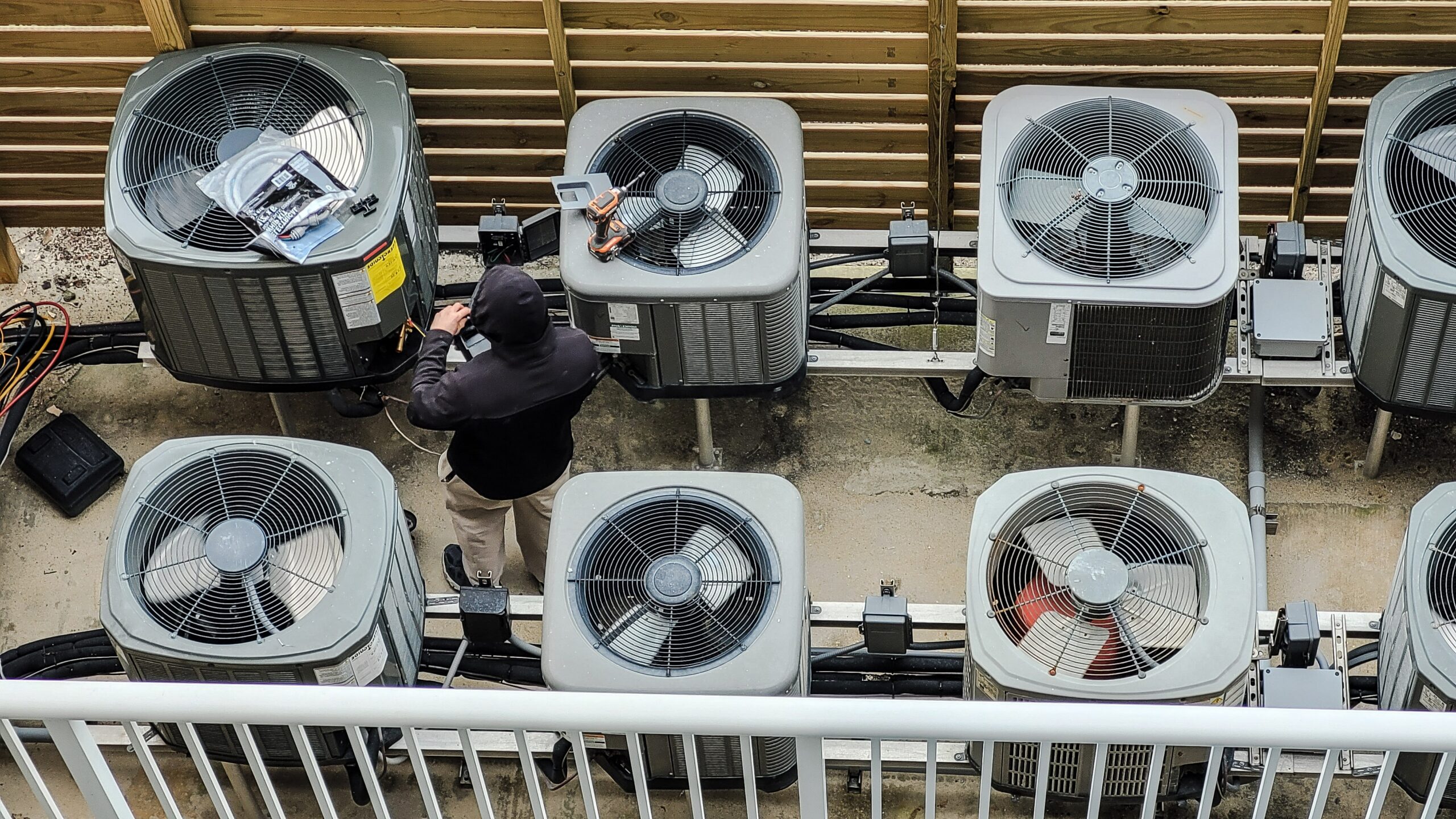
What the New Refrigerant Rules Mean for Your Multifamily AC System
Commercial HVAC
Our Awards






If you manage or own multifamily properties in the Dallas–Fort Worth area, a major regulatory shift is already reshaping how your HVAC systems are purchased, installed, and serviced. The EPA’s Technology Transitions Rule has ushered in a new generation of refrigerants, and the deadlines that matter most to property managers are either here or fast approaching.
Here’s what you need to know about the transition from R-410A to R-454B, how it affects multifamily buildings specifically, and what steps you should be taking now.
What’s Changing and Why
For decades, R-410A has been the standard refrigerant in residential and light commercial air conditioning systems across the United States. But R-410A carries a high global warming potential (GWP) of 2,088—meaning that when it escapes into the atmosphere, its greenhouse effect is more than 2,000 times that of carbon dioxide.
Under the American Innovation and Manufacturing (AIM) Act, the EPA finalized its Technology Transitions Rule requiring that new residential and light commercial HVAC equipment manufactured after January 1, 2025, use refrigerants with a GWP of 700 or less. The industry’s primary replacement is R-454B, which has a GWP of just 466—a 78% reduction compared to R-410A.
Key Deadlines Multifamily Operators Need to Know
January 1, 2025: All newly manufactured residential and light commercial AC systems and heat pumps must use low-GWP refrigerants such as R-454B. Equipment manufactured before this date received a one-year grace period for installation.
January 1, 2026: The installation deadline for any remaining R-410A equipment manufactured before the cutoff. If you have R-410A units sitting in a warehouse or staging area, they must be installed before this date or they cannot legally be put into service.
January 1, 2027: The installation deadline for Variable Refrigerant Flow (VRF) systems using older refrigerants. VRF technology is common in larger multifamily new construction projects, so this extended timeline is especially relevant to developers and property owners with new builds in the pipeline.
What This Means for Your Existing Equipment
An important clarification for multifamily operators: these regulations apply to new equipment, not to systems already installed and operating. Your existing R-410A units can continue to run, be repaired, and be recharged for the duration of their useful life. R-410A refrigerant remains available for servicing purposes.
However, when the time comes to replace aging equipment—which, for many multifamily portfolios in the DFW area, happens on a rolling basis across dozens or even hundreds of units—every new system you install will now use R-454B. Planning for this shift in your capital expenditure budgets and replacement cycles is critical.
Special Considerations for Multifamily Buildings
The transition carries unique implications for multifamily properties that go beyond a simple equipment swap.
A2L Classification and Safety Requirements
R-454B is classified as an A2L refrigerant, meaning it has a lower flammability rating compared to traditional refrigerants. While this classification is considered mildly flammable—not a significant safety risk under normal operating conditions—it does trigger updated building code requirements. Equipment designed for R-454B includes built-in leak detection and safety controls to meet these standards.
Building Code and Fire Safety Compliance
In multifamily buildings where refrigerant lines penetrate fire-rated floor assemblies, updated codes may require that those lines be placed in fire-rated shafts or that additional fire safety measures be implemented. This is a compliance detail that many property managers may not be aware of yet, and one that can add cost and complexity to retrofit projects if not planned for in advance.
Technician Certification and Supply Chain
EPA Section 608 certification requirements have been updated to include A2L-specific handling procedures. Not every HVAC contractor has technicians who have completed this updated training. Additionally, the industry has experienced supply chain constraints around R-454B refrigerant and the 20-lb cylinders used for A2L refrigerants, which has affected availability for installers and service contractors in some markets.
Working with a commercial HVAC partner that has already invested in A2L training and maintains reliable supply relationships is essential for avoiding costly project delays.
What Multifamily Property Managers Should Do Now
- Audit your equipment inventory. Identify which units are nearing the end of life and will require replacement within the next 12–24 months. Prioritize those for R-454B planning.
- Update your capital planning. R-454B systems may carry different pricing than their R-410A predecessors, and installation may involve additional code compliance work in some buildings. Build these variables into your replacement budgets.
- Verify your HVAC contractor’s readiness. Confirm that your service partner’s technicians hold current A2L certifications and that they have access to R-454B equipment and refrigerant supply.
- Review building code implications. For properties with fire-rated assemblies or centralized refrigerant distribution, confirm whether additional fire safety measures will be required for new installations.
- Don’t wait for emergency replacements. Proactive planning gives you more leverage on pricing, scheduling, and compliance—especially during peak cooling season in North Texas.
What Multifamily Operators Need to Do Next
The refrigerant transition is not a future event—it’s happening now. For multifamily operators in DFW, the shift to R-454B touches equipment procurement, capital budgeting, building code compliance, and contractor selection. The property teams that get ahead of this transition will avoid emergency-driven decisions and keep their buildings comfortable and compliant year-round.
Impact Mechanical has served the DFW multifamily market for over 25 years, providing large-scale HVAC installation, replacement, and preventative maintenance. Our technicians are trained and certified in A2L refrigerant handling, and we work closely with property management teams to plan transitions that minimize disruption and control costs.
To discuss your property’s HVAC replacement strategy, request a quote or call us at 214-210-1921.